
PTZ Camera Sensor Size Guide:
How 1-Inch Sensors Improve Image Quality
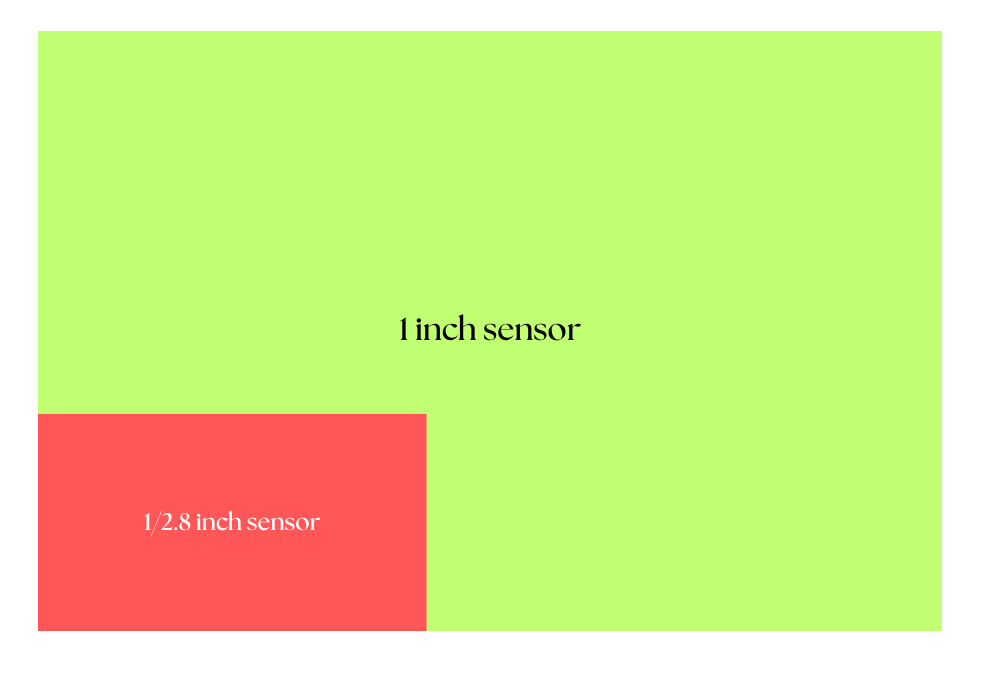
Sensor size is the single most critical factor in PTZ camera performance. Compared to standard 1/2.8-inch sensors, a 1-inch sensor captures nearly four times more light—delivering measurably better low-light clarity, dynamic range, and color accuracy across professional broadcast applications.
This guide explains how sensor size affects real-world image quality and how to choose the right format for your production.
Table of Contents
Sensor Fundamentals: Why Physical Scale Dictates Performance
Sensor size determines how much light a camera can physically capture—and light is the raw material of every image. Before comparing specifications, it helps to understand what actually happens inside a sensor when a PTZ camera records footage.
How Image Sensors Convert Light into Video
Think of an image sensor as a wall of millions of tiny buckets. Each bucket—called a photosite—collects incoming light and converts it into an electrical signal. That signal is then processed into the pixels that form your final image.
Two factors determine how well this process works:
- Dynamic Range — A camera’s ability to capture detail in both bright and dark areas of the same frame simultaneously. Think of it as the difference between seeing clearly in a room with one bright spotlight and deep shadows, versus everything going either white or black.
Pixel Size — How much light each individual photosite can hold before it runs out of capacity. Larger pixels hold more light, which means more image data and fewer errors.
Modern PTZ cameras use CMOS sensors (Complementary Metal-Oxide-Semiconductor), which allow for faster frame rates and on-chip signal processing—making them the current industry standard for live production.
Sensor Size vs. Pixel Density: The Core Trade-Off
Every sensor has a fixed physical area. That area is divided into pixels—and here is where size becomes critical.
A small sensor trying to deliver 4K resolution must pack millions of pixels into a tight space, forcing each pixel to shrink. Smaller pixels are like smaller buckets: they overflow in bright light, causing blown-out highlights, and they struggle to collect enough light in dim conditions, producing visible noise and grain.
A 1-inch sensor has nearly four times the surface area of a standard 1/2.8-inch sensor. That extra space allows each pixel to be physically larger—holding more light, producing a cleaner signal, and delivering more usable image data in every frame.
| 1/2.8″ Sensor | 1-Inch Sensor | |
| Pixel size | Small | Large |
| Light per pixel | Low | High |
| Low-light noise | High | Low |
| Dynamic range | Limited | Extended |
| Typical use case | Conferencing / utility | Broadcast / live production |
Signal Processing and Noise: Where Size Matters Most
Low-light performance is where the gap between sensor sizes becomes impossible to ignore.
When a scene is dark, a camera has to amplify its electrical signal to make the image visible—similar to turning up the volume on a weak radio signal. The problem is that amplification doesn’t just boost the useful signal; it also magnifies any interference already present. On a small sensor, that interference shows up as digital noise: the gritty, grainy texture that makes footage look cheap and unprofessional.
A 1-inch sensor starts with a stronger, cleaner signal. Less amplification is needed, which means less noise—and critically, less need for aggressive noise-reduction processing. Heavy noise reduction is what causes that soft, “smeared” look where fine textures and sharp edges lose their definition.
The result is footage that retains natural sharpness, accurate skin tones, and stable detail—even when the lighting is far from ideal.
The Visual Advantage: How Sensor Scale Transforms Image Quality
A larger sensor does more than just brighten an image. It fundamentally changes the visual language of the footage—the difference between video that looks “recorded” and video that looks “produced.” This section breaks down the two most visible ways sensor size transforms image quality in professional PTZ applications.
Dynamic Range: Seeing the Full Picture at Once
Dynamic Range is a sensor’s ability to capture detail in both the brightest and darkest parts of a frame at the same time. Think of it like human vision: when you walk into a room with a bright window on one side and a dim corner on the other, your eyes adjust naturally to see both. A camera with limited dynamic range cannot do this—it has to choose one or the other.
Large-format sensors achieve wider dynamic range through a higher Full Well Capacity—the maximum amount of light each photosite can hold before it overflows and loses data. More capacity means more headroom before highlights blow out or shadows collapse into black.
Why this matters in live production
In a typical live stage environment, high-contrast lighting is unavoidable. A speaker standing under an intense spotlight against a dark background creates exactly the kind of scene that exposes a small sensor’s limitations.
A small sensor is forced into a lose-lose decision: expose for the speaker’s face and lose all shadow detail, or preserve the background and blow out the highlights entirely. A 1-inch sensor has enough dynamic range headroom to hold detail in both simultaneously—keeping the speaker’s face correctly exposed while retaining visible depth in the background.
Color accuracy follows the same logic
More light data means a larger “budget” for the camera’s color processing engine to work with. The result is more accurate skin tones, smoother color gradients, and richer representation of costume colors and brand visuals—replacing the flat, plastic look common in small-sensor footage with natural, film-like tonal transitions.
Depth of Field: Making Your Subject Stand Out
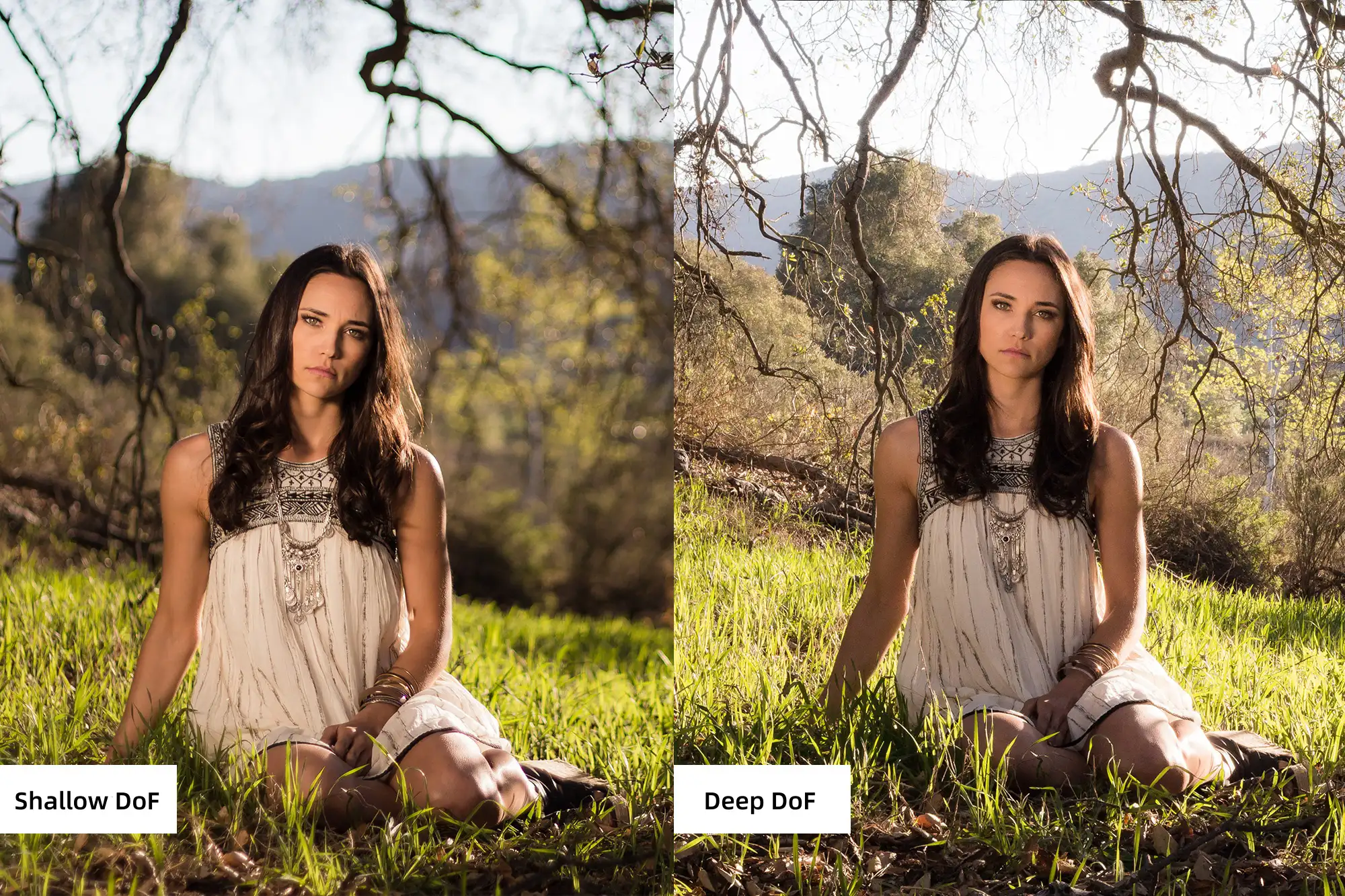
Depth of Field (DoF) refers to how much of the frame appears in sharp focus at any given moment. A shallow depth of field keeps the subject sharp while the background blurs softly—a technique called bokeh. A deep depth of field keeps everything sharp from foreground to background.
This is not a software effect. It is optical physics, directly tied to sensor size.
For any given field of view, a larger sensor requires a longer focal length lens. Longer focal lengths produce shallower depth of field—which is why larger sensors naturally create more background separation.
The problem with small sensors
Most standard PTZ cameras produce what cinematographers call an “infinite focus” look—the speaker, the furniture behind them, and the wall in the background are all equally sharp. The result is a cluttered, flat image with no clear visual hierarchy. The viewer’s eye has nowhere natural to land.
What a 1-inch sensor changes
A PTZ camera equipped with a 1-inch sensor can achieve a genuinely shallow depth of field, softly blurring the background while keeping the subject crisp and three-dimensional. This gives the director a creative tool that was previously only available with large studio cameras and interchangeable prime lenses.
In practice, this elevation in production value is immediately visible across high-end applications:
| Application | Visual Impact of Shallow DoF |
| Corporate keynote | Speaker isolated from branded backdrop, clean and authoritative |
| House of worship | Presenter separated from congregation, intimate and focused |
| Live podcast | Studio-quality subject isolation without physical set construction |
| Live streaming | Three-dimensional depth that distinguishes broadcast from webcam quality |
Small vs. Large Format Sensors: Choosing the Right Tool for the Job
The best sensor is not always the largest one—it is the one that best fits the demands of the environment. Understanding the strategic difference between small-format and large-format sensors helps production teams make smarter purchasing decisions without overspending or underdelivering.
Performance vs. Economics
Sensor size directly determines where a camera sits on the performance spectrum—and at what cost.
Small-sensor cameras (1/2.8″ or 1/3″) are compact, lightweight, and cost-effective, making them the practical choice for high-volume deployments—think university classrooms, corporate huddle rooms, or any environment where consistent, reliable coverage across multiple units matters more than cinematic image quality.
Large-sensor cameras (1-inch)—such as the Telycam Explore and Explore XE—carry a premium price but deliver the visual authority required for high-stakes productions: executive keynotes, live music performances, televised house of worship services, and broadcast environments where the image itself is part of the message.
Lens and Field of View
Sensor size influences optical behavior—but it does not have to limit zoom capability. Conventionally, large sensors have been associated with wider angles and moderate zoom ranges, while small sensors were favored for long-range magnification. However, advances in optical engineering have largely closed this gap.
In practice, the more important consideration is how well the lens is matched to the sensor. A large sensor paired with a precisely engineered optical group can deliver both wide-angle clarity and substantial zoom reach—without the trade-offs traditionally associated with either format.
The Telycam Explore, for example, pairs a 1-inch sensor with 20x optical zoom—demonstrating that large-format sensors no longer require a compromise on reach. This combination delivers both the wide-angle precision of a large sensor and the magnification range previously associated only with small-sensor cameras.
Conclusion: Sensor Selection Dictates Image Quality
The image sensor is the one component in a PTZ camera that software cannot fix and post-production cannot replace. Every decision made downstream—processing, color grading, noise reduction—is constrained by the quality of data the sensor captured in the first place. If that data is lost at the point of acquisition, it is gone permanently.
Throughout this guide, we have seen that sensor size is not a minor specification—it is the physical foundation of image quality. A 1-inch sensor delivers wider dynamic range, cleaner low-light performance, more accurate color, and genuine depth of field control. These are not incremental improvements; they are the difference between footage that communicates and footage that convinces.
For production teams evaluating PTZ cameras, the investment in a larger sensor is the most direct path to broadcast-grade image quality. When the camera represents a brand, a performance, or a message, sensor size is not a compromise worth making.







Contact Telycam
Sales Inquiries
sales@telycam.com
Call Us
+86-755-33275155