
Steady on Target: Telycam PTZ Coverage at the National Pistol Championship
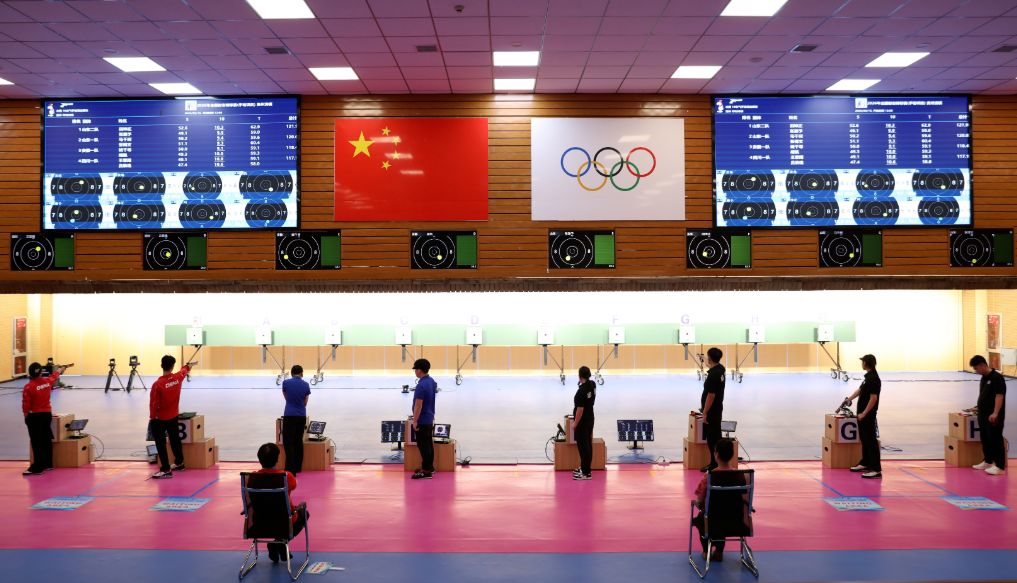
From June 13 to 20, 2026, the National Shooting Championship (Pistol Category) was held at the Qingzhen Sports Training Base in Guizhou. The tournament brought together 396 athletes from 30 provincial delegations, competing across men's and women's 10m air pistol, the 10m air pistol mixed team event, men's 25m rapid fire pistol, women's 25m pistol, and men's 50m pistol — all scored on the ISSF-certified SIUS electronic laser system, with draws, scoring, and results processed through the official SiusRank software. In this sport, precision is the standard, not the exception.
The Challenge
Unlike field or track events, shooting unfolds in fractions of a second and within a tightly controlled environment — a combination that places unusual demands on both equipment and on-site coordination. The production team identified four core challenges going into the event:
01. Instantaneous Action
A shooter's aim, trigger pull, and point of impact happen almost instantaneously. At range, traditional manual focus and framing struggle to keep pace, risking missed footage of the exact moments that matter most.
02. Multi-Angle Complexity
A single shooting event calls for simultaneous coverage of shooter close-ups, profile stance, spectator reaction, and full-range context — coverage that traditionally requires a large camera crew to achieve.
03. Restricted Access
Shooting ranges are high-security environments by design, and personnel cannot freely enter the core competition area to adjust or reposition cameras — making remote, hands-off operation a hard requirement rather than a convenience.
04. Broadcast Standards
National-level coverage and archival footage must meet broadcast standards for resolution, long-range optical clarity, operational stability, and color accuracy.
The Blueprint: Halving the Hardware, Doubling the Range
To shatter these constraints, the technical team threw out the traditional broadcast playbook. Instead of deploying the dozens of fixed cameras typical for an event of this scale, they engineered a highly automated, six-camera remote grid using Telycam PTZ systems.
By leveraging the extreme optical reach of just two Explore cameras and four Vision+ 4KN cameras, the team slashed the required hardware count by 50%. Every single angle was managed entirely over IP from the safety of the exterior control room, proving that leaner infrastructure can deliver richer coverage.
The Camera Layout
The same six-camera configuration was used for both the 10m and 25m pistol events, with only minor adjustments in camera orientation to suit the differences between the two disciplines, starting with the layout for the Men's 10m Air Pistol Final.
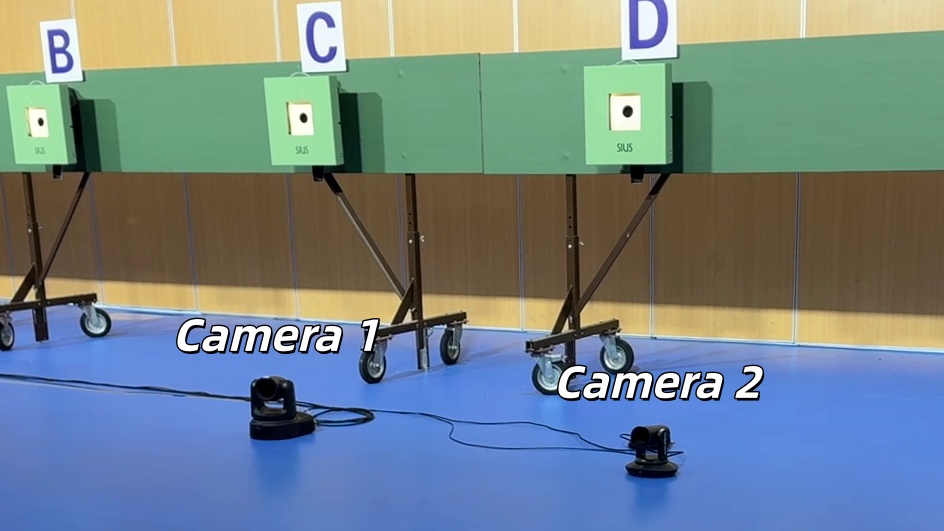
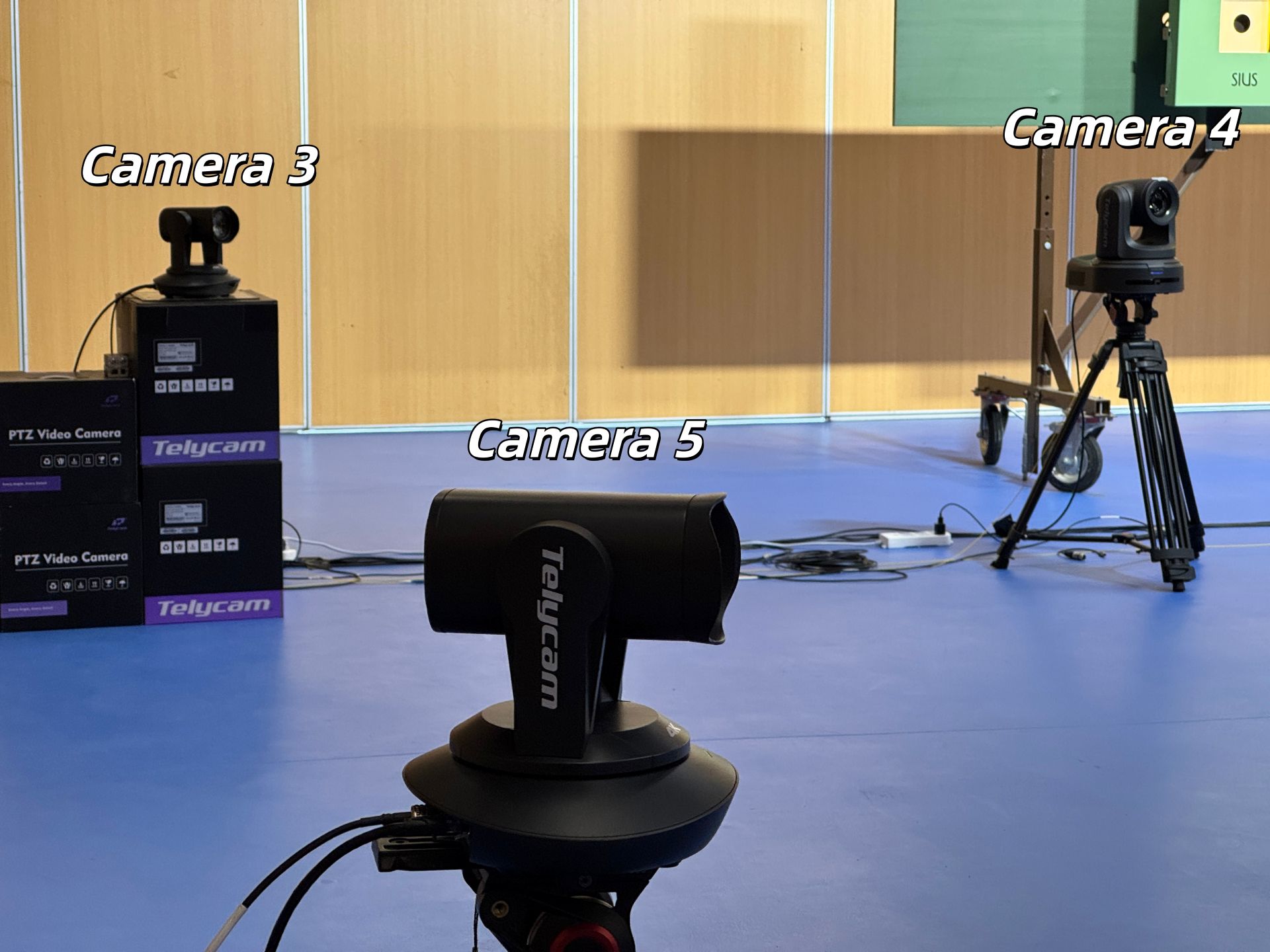
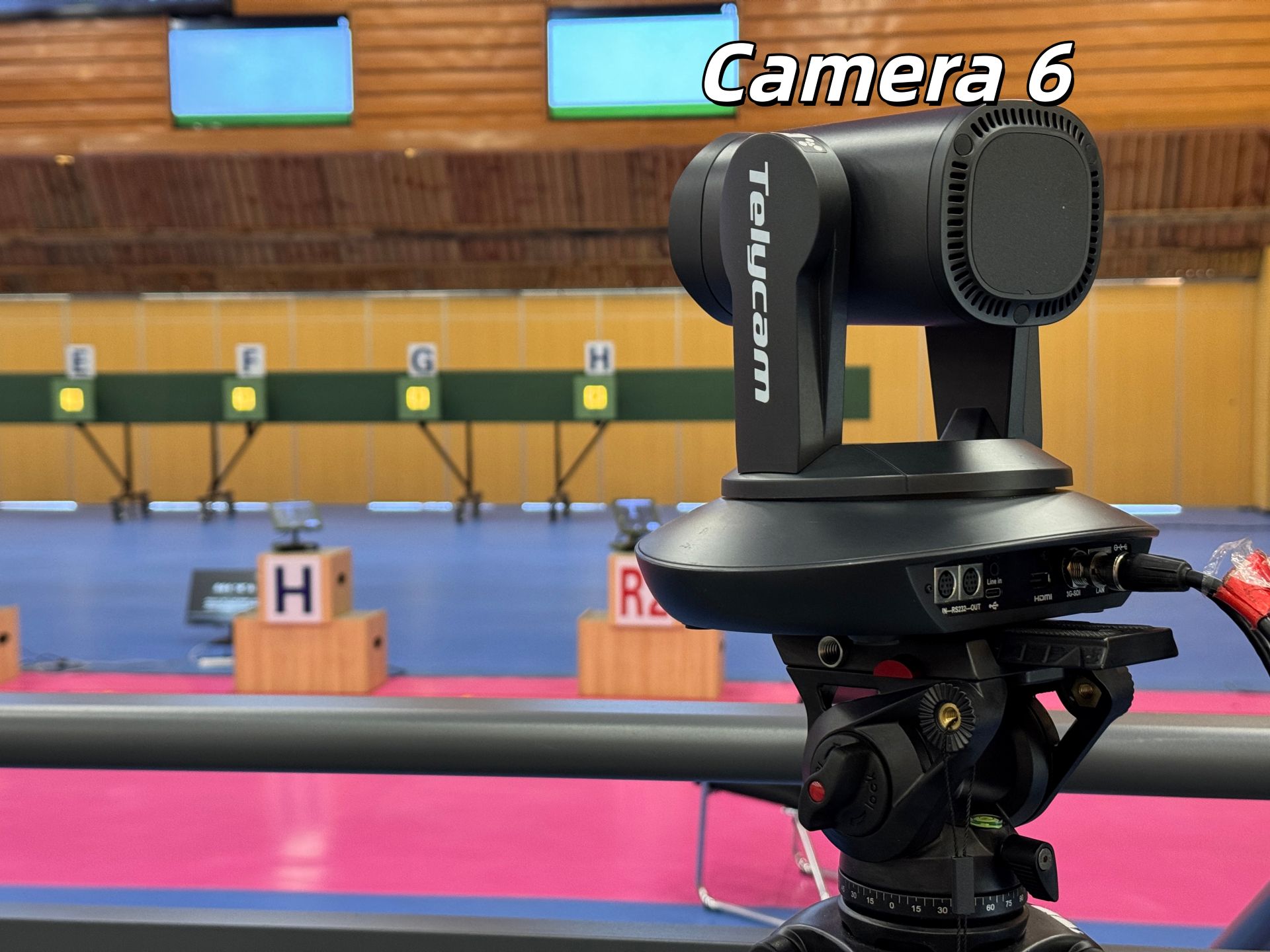
Camera 1
Explore
Positioned in front of Target Stations C/D, angled to capture shooters at Stations E through H.
Camera 2
Vision+ 4KN
Positioned alongside Camera 1 on the C/D line, providing a second angle on the same group of shooters.
Camera 3
Explore
Mounted on a tripod near the left side of the R1 reference line, framing shooters at Stations A through D.
Camera 4
Vision+ 4KN
Also mounted on a tripod near R1, positioned for a broader vantage over the full range.
Camera 5
Vision+ 4KN
Positioned along the R1 side, capturing profile shots of shooters during their stance and shot execution.
Camera 6
Vision+ 4KN
Positioned behind and to the side of the firing line, alternating between wide range coverage and shots of the spectator stands.
The 25m Adjustment
The transition from the 10m air pistol events to the 25m rapid-fire discipline introduced a longer shooting distance and a change in range geometry, requiring only a minimal adjustment to the existing setup.
The six-camera system remained fully unchanged, with the only modification taking place on Camera 2 (Vision+ 4KN), which was manually reoriented on the C/D line from the shooters toward the downrange target boards.
From there, its 30× optical zoom bridged the extended 25-meter distance, delivering stable, high-clarity target imagery that complemented the SIUS scoring system without any additional hardware or signal infrastructure changes.
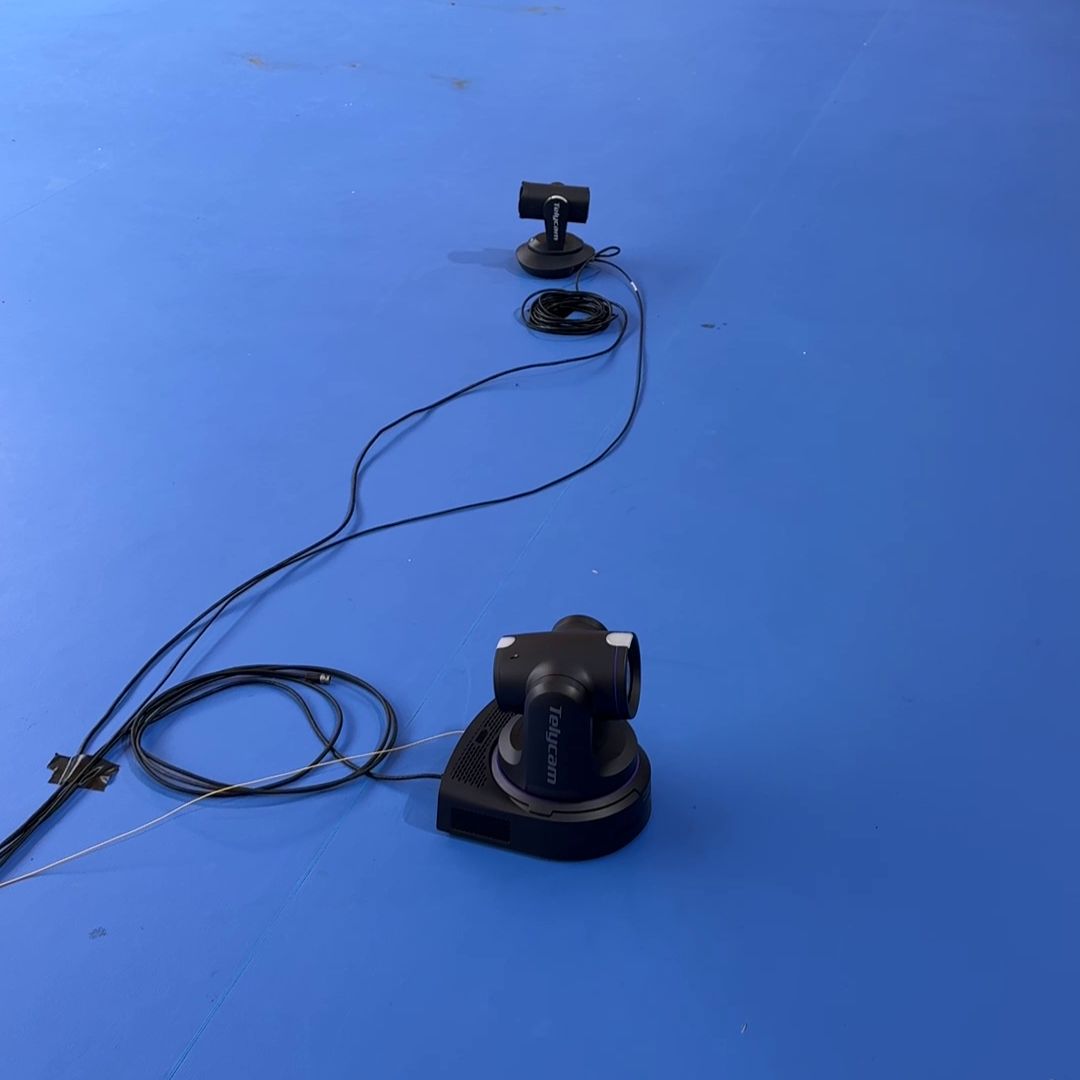
System Connectivity and Control Workflow
The production relied on a hybrid signal architecture designed to maximize broadcast stability while minimizing on-site cabling.
• Video Feeds: Explore cameras utilized SFP fiber links for long-distance reliability, while Vision+ 4KN ran uncompressed SDI directly into the switcher for ultra-low latency.
• Unified Power: The Explore units ran on PoE++, while the Vision+ 4KN units operated on PoE+. Both consolidated power and data onto a single cable per unit, eliminating separate power runs.
• Remote Control: PTZ commands and WebUI management ran entirely over the IP network, allowing operators to tune all camera parameters from the control room.
In the control room, production ran on a hybrid hardware-and-software workflow:
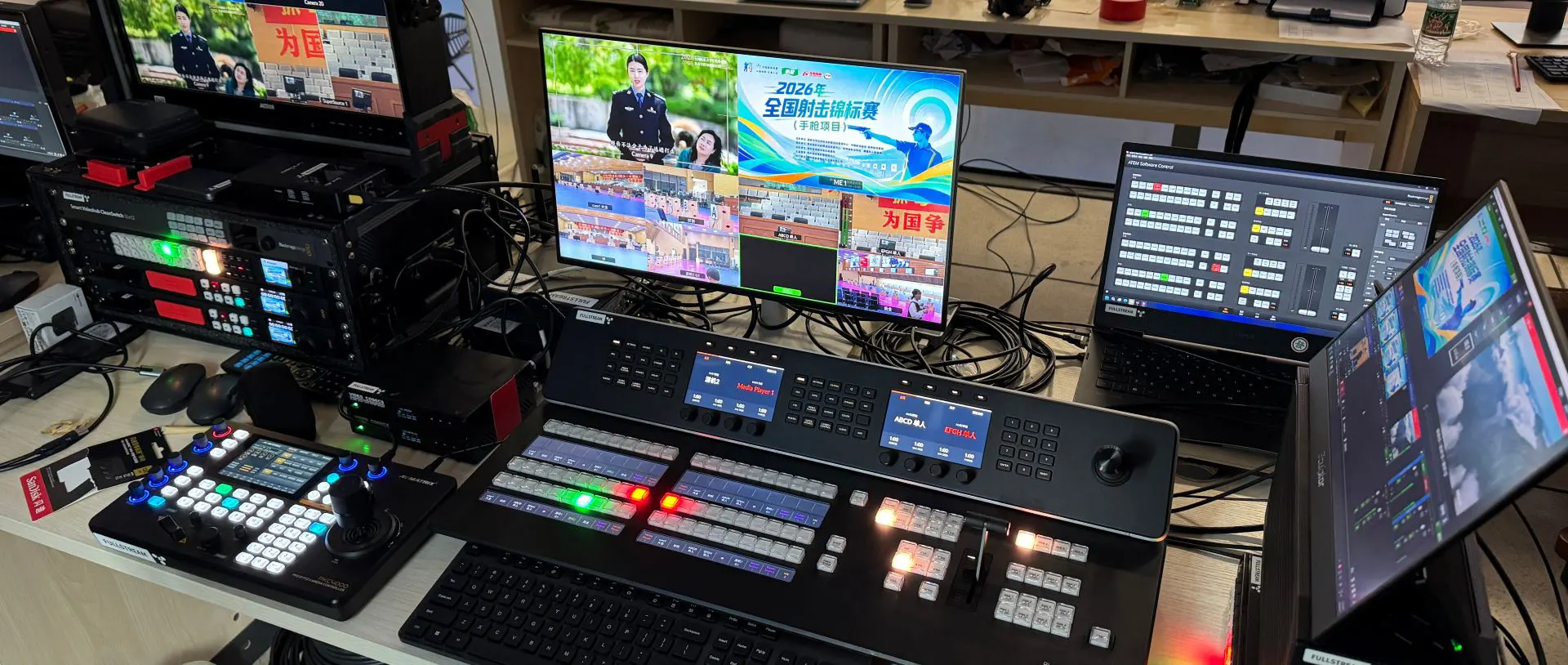
Blackmagic Design ATEM 1 M/E Advanced Panel 20 — handled real-time signal switching and live production control
AVMATRIX PKC4000 IP controller — dedicated to remote PTZ control and preset recall
vMix — served as a complementary production platform, managing multi-camera signals and handling the graphics overlay layer — athlete name bars, live scoring, and match information — composited and synced directly with the live feed
Final Results: A Week of Competition, Zero Compromises
Across both the 10m and 25m pistol events, the six-camera PTZ system delivered complete broadcast coverage — including shooter close-ups, target results, full-range context, and audience reactions — without requiring any operator access to the firing line.
The same system carried over seamlessly between disciplines with no equipment rebuild, and only a single camera required reorientation to accommodate the 25m configuration. Overall, the deployment remained compact and efficient, achieving full coverage with significantly fewer cameras than a traditional fixed setup.
With fiber-based video transmission, SDI output, and PoE-powered connectivity, the workflow remained stable and streamlined throughout the event. This allowed the production team to focus on monitoring and live coordination, while the SIUS scoring system ensured synchronized and reliable competition data for both judging and broadcast output.
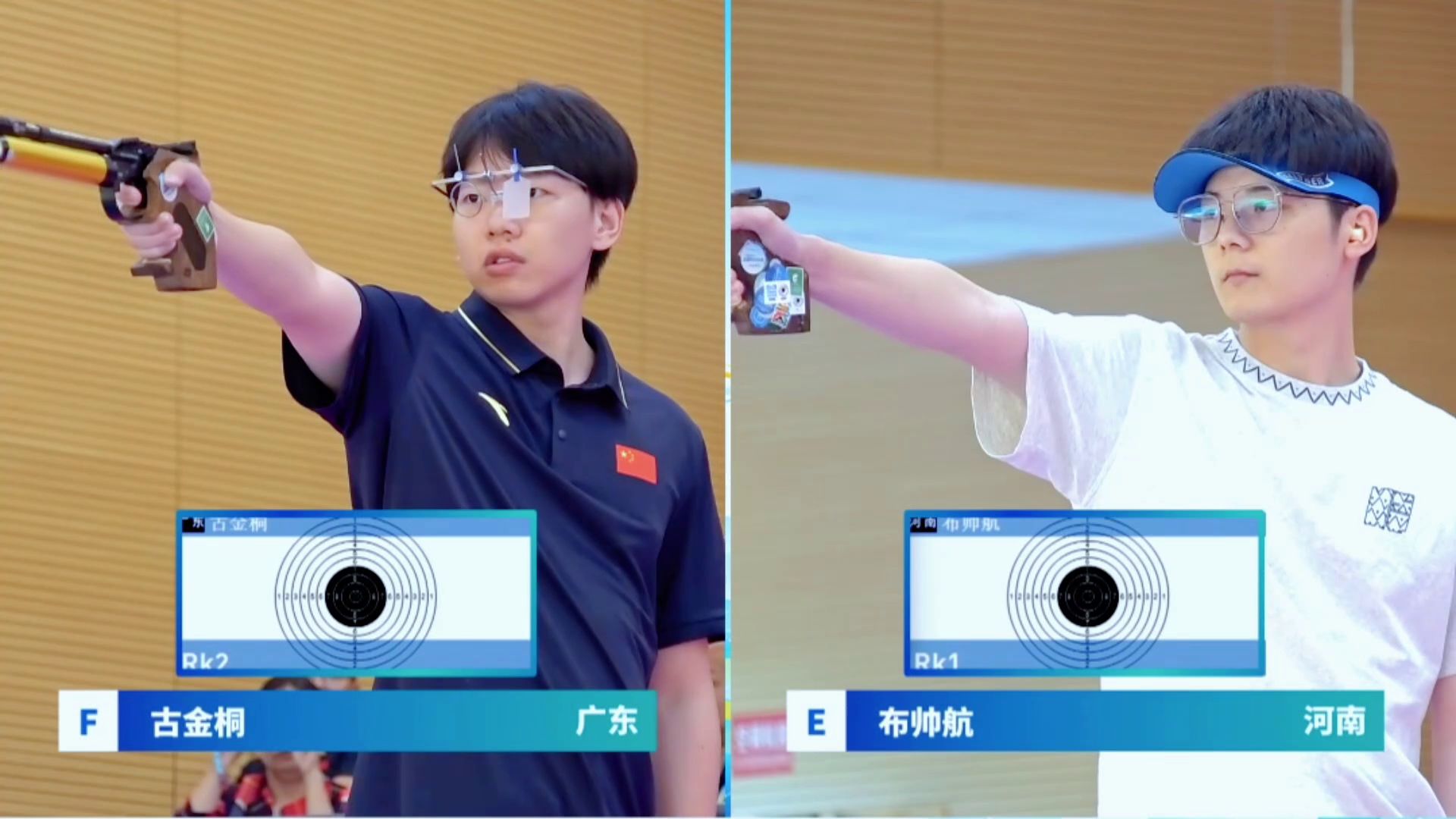
"In shooting, you don't get to walk over and adjust a camera mid-match. Every position has to be right before the first shot, and it has to stay right for the rest of the competition. What surprised me most was how little hardware we actually needed — about half the cameras we'd normally bring to an event this size. Six cameras, fully remote, and we never had to put anyone where the rules said no one could stand."
— Song Jie, Broadcast Technical Lead, 2026 National Shooting Championship (Pistol)
Beyond the Range
Most live sports broadcasts come down to camera count and operator skill. Shooting takes the operator out of the equation entirely. The answer isn't more people on the floor — it's a camera network precise enough, and remote control reliable enough, that no one needs to be there at all.
As sports production continues to evolve, the traditional model of large crews and full-time manual operation is giving way to something leaner: remote-first, PTZ-driven, and built around small, highly efficient teams.
The 2026 National Shooting Championship put that shift to the test — and showed what Telycam's PTZ systems can deliver in environments defined by precision, restricted access, and zero tolerance for error. Looking ahead, Telycam will continue investing in sports broadcasting, live production, and professional imaging, building smarter, more reliable visual solutions for the events that demand them most.