
SRT VS. NDI Bridge
Which is Better for Your Remote Production?
Remote production is no longer a buzzword — it’s the new normal. Whether you’re broadcasting live sports, producing hybrid events, or connecting teams across continents, the way you move video matters. That’s where the debate begins: SRT VS. NDI Bridge. Both promise reliable remote workflows, but which one really fits your production needs?
Table of Contents
What is SRT?
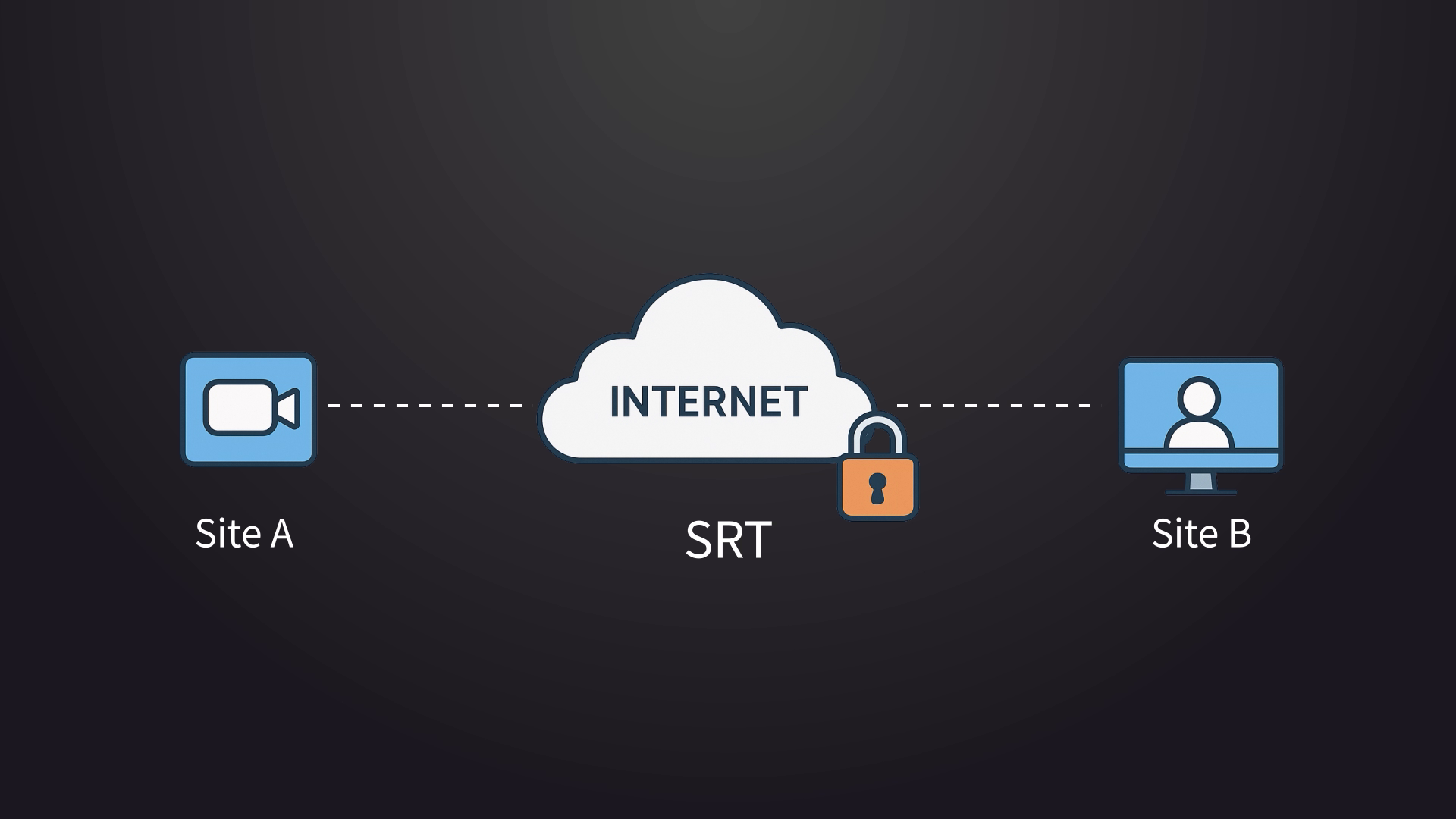
SRT (Secure Reliable Transport) is an open-source protocol designed to send compressed video over unpredictable networks, like the public internet. It has quickly become a go-to solution in broadcasting, streaming, and remote production, thanks to its reliability and flexibility.
What is NDI Bridge?
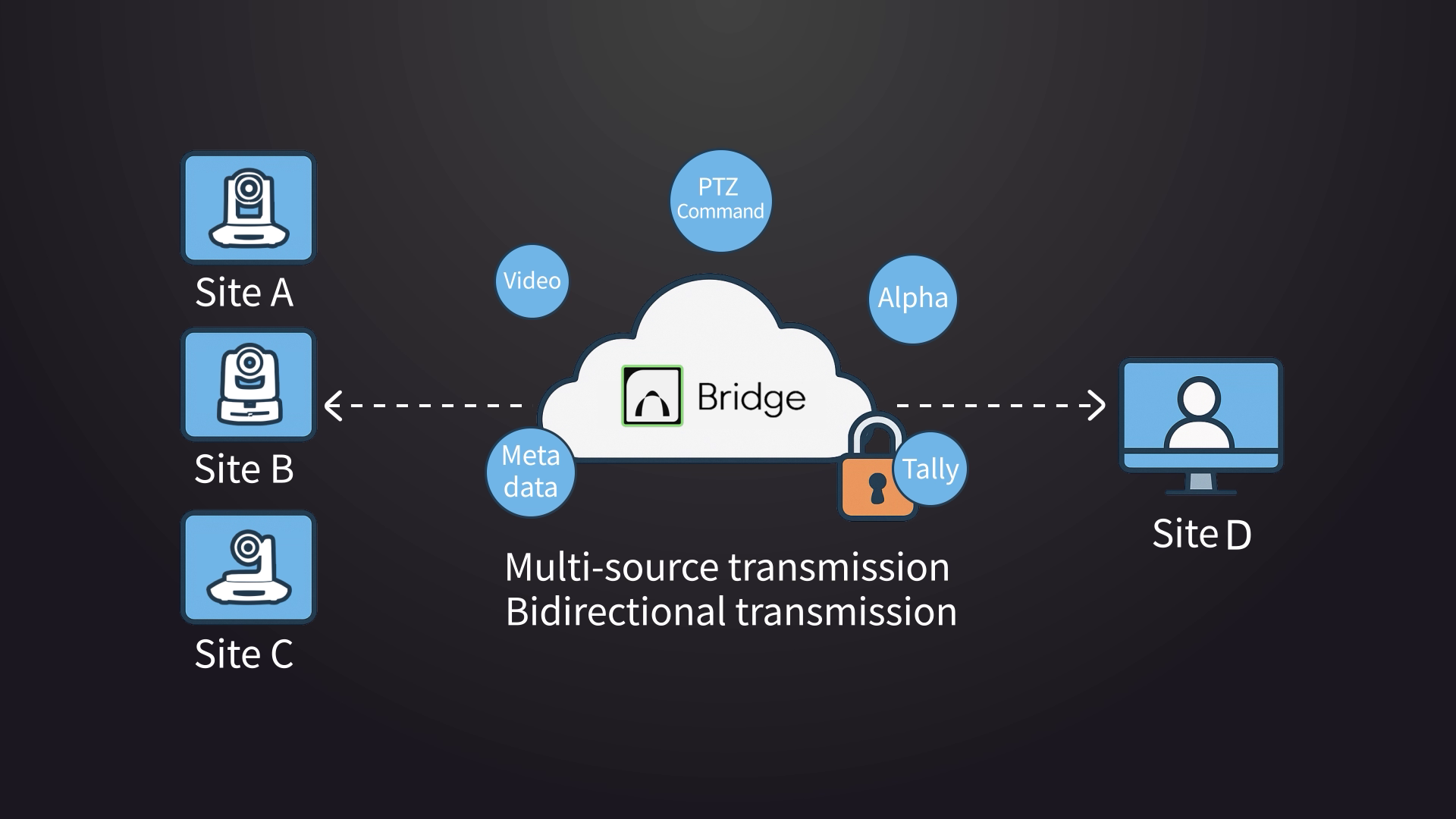
NDl Bridge is first released in the NDI 5 SDK. Unlike SRT, which typically sends a single video stream, NDI Bridge lets you tunnel an entire NDI environment across the internet. This includes multiple video sources, audio, tally signals, PTZ control, and metadata — making it ideal for collaborative remote production workflows.
Why Use SRT?
- Performs well even under unstable connections.
- Sends video point-to-point with packet recovery and encryption
- Compatible with most encoders, decoders, and cloud platforms
Why Use NDI Bridge?
- Transports multiple NDI sources over WAN
- Maintains full NDI functionality, including tally, alpha channels, and PTZ commands
- Simple setup using Bridge Host + Bridge Join
- Supports encryption and optional NDI HX compression to manage bandwidth
Example Scenarios
SRT
Example Scenario:
Imagine you’re broadcasting a live concert. Your encoder in Los Angeles sends an H.264 SRT stream to a cloud server in New York. Despite the long distance and unpredictable network conditions, the stream arrives smooth, stable, and secure, ready for viewers to enjoy.
NDI Bridge
Example Scenario:
A church with two campuses in different cities uses NDI Bridge to send live camera feeds from one location to another during services. The production team can control pan, tilt, and zoom, access NDI graphics, and tally signals — all from the main production center, with full control over the workflow.
Example Scenario 2:
A production team in Tokyo collaborates with a graphics team in Toronto. The graphics workstation sends NDI overlays in real time, with alpha channels preserved — something that would be lost if they used SRT alone.
So When to Use Which?
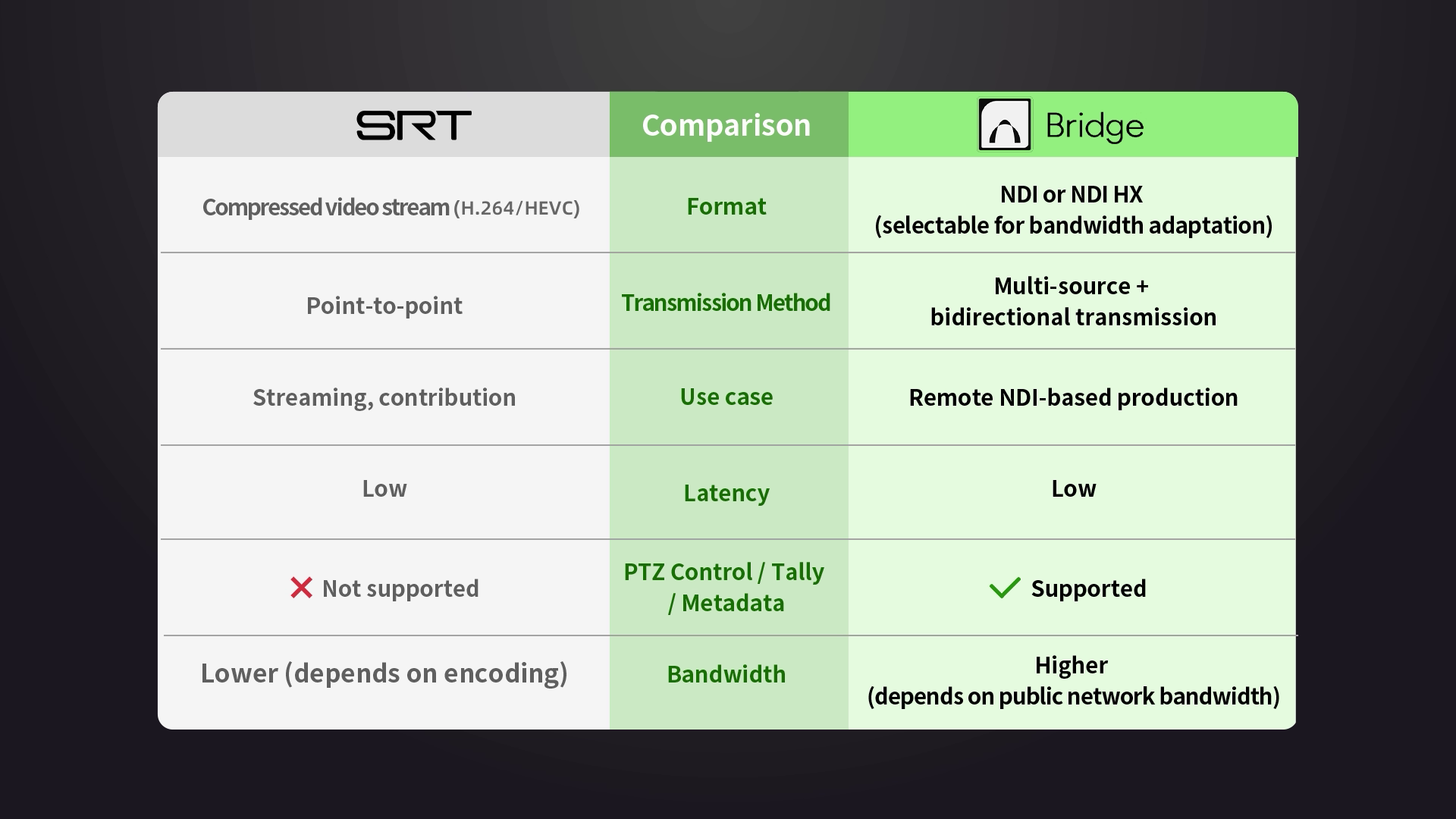
When it comes to remote production, the choice between SRT and NDI Bridge really depends on your workflow.
Use SRT when you need to move a single clean feed from point A to point B — fast, reliable, and without eating up too much bandwidth.
Use NDI Bridge when you want to collaborate as if you’re all on the same local network, sharing full production tools across continents. Just keep in mind that your gear needs to be NDI-enabled, like Telycam PTZ cameras, to take full advantage.
In many remote productions, you don’t have to choose between SRT and NDI Bridge — combining the two can deliver the best of both worlds.
For example, a TV studio conducts a live interview with multiple remote guests in different cities. Each guest’s camera feed arrives at the studio via SRT, providing a stable and reliable video signal. At the same time, NDI Bridge allows the studio team to perform basic remote control of the cameras, such as adjusting pan, tilt, and zoom. This way, the production team gets both dependable video and the ability to manage remote sources in real time.
This workflow combines the strengths of SRT and NDI Bridge, ensuring complex multi-location productions run smoothly and professionally.
In the end, it’s not about which protocol is “better,” but which fits your remote production workflow. SRT delivers reliability for single feeds, NDI Bridge enables full collaboration across networks, and combining the two can give you the best of both worlds — reliable long-distance transport with flexible local production control. Choosing the right approach makes all the difference.
Contact Telycam
Sales Inquiries
sales@telycam.com
Call Us
+86-755-33275155